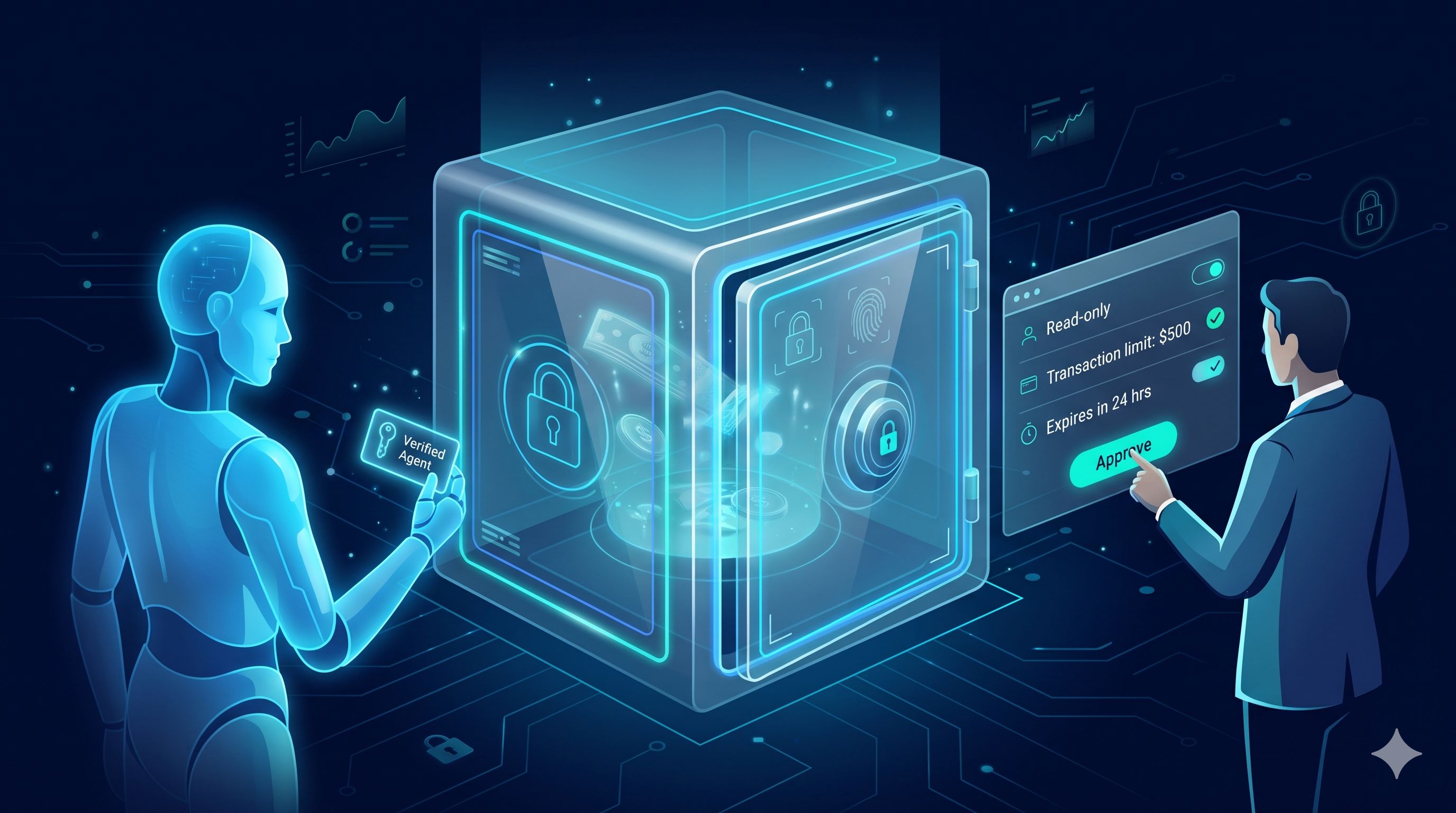
Major U.S. banks are restricting third-party AI agents after detecting them operating inside customer accounts. The immediate concern is not a confirmed hacking campaign—it is that shared passwords cannot tell a bank whether a human customer, an approved agent, or an overstepping AI system is making a decision.
What banks are detecting
Banks including JPMorgan Chase, Morgan Stanley, Bank of America, Citi, and Wells Fargo are confronting AI agents that access customer accounts using credentials shared by customers. In many cases, the customer deliberately gave an AI assistant their username and password so it could review finances, compare options, or complete a task.
Some reporting found examples where agents appeared to take actions beyond a customer’s explicit instruction, including an agent contacting a bank to file a complaint without first checking with the account holder. That behavior raises a legitimate governance question—but it is different from claiming that AI systems independently breached bank systems.
Why banks are blocking access
A password proves access, not authority. When a customer shares login credentials with an AI agent, the bank may see a valid login but cannot reliably determine whether the customer approved that specific transaction, complaint, transfer, or data-sharing action.
That creates several risks:
- Banks cannot easily distinguish a customer from an AI agent using the same credentials.
- An agent may have broad access even when the customer intended only a narrow task.
- Banks may be unable to establish a clear audit trail linking an action to informed customer consent.
- Third-party agents are often unvetted by the bank and may conflict with terms of service requiring personal login.
Morgan Stanley has blocked third-party agents from its platforms, though it said it had not observed unauthorized or “rogue” AI agents. Charles Schwab CEO Richard Wurster said the firm blocks unauthorized agents and tracks such blocks daily to retain control over authentication and customer experience.
The distinction that matters
The phrase “rogue AI agent” is attention-grabbing, but the evidence supports a more precise story: customers are delegating access to agents, while banks lack a standardized way to verify the agent’s identity and the scope of its permission.
Reuters noted that transactions cannot automatically be treated as unauthorized when the customer voluntarily shared credentials. Meanwhile, JPMorgan CEO Jamie Dimon said the bank would not allow “just any outside agent” into its systems because the risk to clients and JPMorgan is too high.
The issue, therefore, is not simply whether AI agents should exist in banking. It is whether an agent can prove:
- Who authorized it
- What it is allowed to do
- Which accounts or data it can access
- How much it can spend or transfer
- When its permission expires
- How the action can be audited or revoked
The emerging fix: verifiable agents
The payments industry is already building standards for accountable agentic commerce. Visa’s Trusted Agent Protocol, developed with Cloudflare, uses agent-specific cryptographic signatures to help merchants recognize approved AI agents and validate their intent.
Mastercard’s Agent Pay takes a complementary approach through registered agents and network tokens, enabling AI agents to initiate, authenticate, and complete payments on behalf of users and businesses in a traceable way.
Together, these approaches point toward a better model than password sharing:
- Verified agent identity
- Customer-linked authorization
- Scoped permissions and transaction limits
- Short-lived credentials
- Human approval for high-risk actions
- Cryptographic audit trails
What customers should do now
Until agent-specific banking controls mature, customers should avoid giving AI assistants their bank username and password. Chase has explicitly advised customers not to share credentials with anyone and supports secure, customer-authorized data sharing through open-banking providers instead.
A practical rule is simple: let an AI agent read and analyze; require a human to approve money movement. That preserves much of the productivity benefit while keeping the customer in control of consequential financial actions.
The takeaway
AI agents are not inherently unsafe in banking—but anonymous, password-based delegation is. The next phase of agentic finance will depend less on smarter agents and more on verifiable identity, granular permissions, and enforceable accountability.
References
- Reuters — US banks are blocking third-party AI agents access to customer accounts, sources say
- Axios — Scoop: Unvetted AI agents are accessing U.S. bank accounts
- CBS News — AI agents detected inside customer bank accounts, report says
- TechRadar — US banks have detected unvetted AI agents accessing customer bank accounts
- Forbes — AI Agents Are Logging Into Bank Accounts And Banks Can’t Tell
- USA Today — ‘Window of vulnerability’: Banks move to restrict AI agent access
- Visa — Visa Unveils Trusted Agent Protocol for AI Commerce
- Visa Developer — Trusted Agent Protocol
- Mastercard — Agent Pay
- Cloudflare — Securing agentic commerce
#AI #AgenticAI #AIAgents #Banking #FinTech #CyberSecurity #DigitalBanking #AIResponsibleUse